Or otherwise known as the original "Clash of the Titans" in Greek mythology. The plot of these stories is usually epic generational struggle between the dominant Elder God and the rebel generation, with one side winning out and establishing alternative hierarchies. These battles were fought before the existence of mankind, setting the backdrop of the fates and the direction of history.
In a similar fashion, the struggle of forces between cap-and-trade, just adopted by the State of California as part of its AB 32 legislation, and those who feel that a more appropriate solution is a direct carbon tax, has been playing out at the highest levels in government here in the US. However, the Federal government has yet to enact a program at the national level.
This clash between all sides can be appreciably viewed as "animation wars" as well. Annie Leonard kicked it off with her wonderful cartoon animation, "The Story of Cap & Trade" in December of 2009. Countering this is an animation from Clean Energy Works in January of 2010 called "The Facts of Cap and Trade" featuring Nat Keohane, economist for Environmental Defense Fund and a special assistant to President Barack Obama on energy and environmental issues in the White House’s National Economic Council.
Nonetheless, the California Air Resources Board approved the final adoption of a cap-and-trade system on Thursday, Oct. 20, per the Sacramento Bee:
Dubbed the economic equivalent of "a moonshot" by its backers and a "job killer" by detractors, the "cap and trade" system adopted Thursday sets limits on the amount of carbon dioxide that can be produced by 350 of the state's largest industrial polluters starting in January 2013.
The state will issue a set number of "carbon allowances." Companies that pollute less than their limit can sell their unused allowances to companies that pollute heavily, creating market incentives to reduce emissions.
The program will create the nation's largest market for trading pollution allowances. Congress in 2009 rejected legislation that would have created a federal cap and trade system. In California, 90 percent of the allowances will be given out free, but 10 percent will be sold on the open market, which some say could raise $500 million a year for the state's climate-change programs.
PCL Insider summarizes the challenges this puts before the state, which makes California THE model for national air pollution control:
This new market approach to lowering carbon emission will likely create a new industry, where firms functioning much like stockbrokerages and financial consultants will manage permit purchases and other trading tools for polluters to distribute from one to another. The Intercontinental Exchange (NYSE:ICE) powered organization Chicago Climate Exchange is such a company, being the largest and longest running carbon exchange firm in North America.
The Hahamongna Watershed Park is undergoing a public review as a result of the public outcry against the devastation of the Arcadia Woodlands and the discovery of the LA County plans to move massive amounts of sediment into the park, which provides for the natural drainage of the Arroyo Seco. Hahamongna is a precious natural resource, not a sediment dump, as chief citizen defender Mary Barrie has documented extensively in public hearing. This has forced the County into an EIR process to show the public what it intends to do in response to the sediment piling up behind Devil's Gate Dam, as a result of lack of maintenance as well as a consequence of the Station Fire. The announcement for the scoping meetings by the County is here on their website.
Karen Bugge, the Altadena Hiker, has posted her story for the EIR process here. I have also participated in the scoping meeting, and submitted the following recommendation for management of this watershed in a new era that is "post-hydraulic" in terms of dealing with nature's processes and the consequences of treating natural water systems like a plumbing project:
Dam reconstruction is effective and entirely feasible in the restoration of natural processes which carry away the sediment instead of trucking it from behind an outdated and unmaintained dam. The short-term costs to change the dam structure and clear out the obstructions to natural flow are vastly smaller than ongoing sediment removal programs which are not actually carried out, for cost reasons, endangering all the communities downstream of the dam. Life cycle estimates (100 years) should be the basis for cost comparisons that include the maintenance and repair for all structures, and this would integrate the value of natural ecosystems into the equation.
Sediment management is the self-inflicted result of placing dams in the way of natural water processes that carry the sediment to the base of the mountains and create a fertile alluvial plain. In order to replenish nutrients in the soil, as well as recharge the natural aquifers that supply well water, these natural drainage patterns must be restored. That doesn't preclude artificial water storage, but these strategies must engage the natural terrain properties that exist free of charge. Water flow moves sediment, and managing that flow rather than stopping it provides a sustainable way to provide water, soil nutrients, sand, gravel and mud into areas that sustain the ecology of the region.
Natural flood protection can be attained by protecting and restoring wetlands and floodplains, and by restoring a river’s natural flow and meandering channel. Giving at least some floodplain back to a river will give the river more room to spread out. Furthermore, wetlands act as natural sponges, storing and slowly releasing floodwaters after peak flood flows have passed.
The following steps should be taken:
1. Adopt a strategic conceptual plan identifying the watershed region and its component functioning parts. Begin implementation of this concept by adopting public-private partnerships that can continually fund the ongoing restoration efforts through private fiscal investment repaid with bond or tax structures. Partner with communities and their leadership, mountains conservancies, conservation nonprofits and the County. Everyone working together can make this happen.
2. Implement reconstruction/modification of the dam to allow water and sediment flows downstream into the areas that need these natural flows. Develop water storage strategies that are effective and multivalent, possibly a series of check dams that work in optimal natural locations and recharge the Raymond Aquifer.
3. Establish a flood plain easement program to minimize flood impacts, reduce repeat damages and store floodwaters for benefits of downstream residents and communities.
The maps above show the intermodal density maps for several large rail operators, and reveals the volume of rail activity across the country. Rail is a huge part of the equation for energy consumption and pollution in all regions, but the picture is immediate and obvious in the scale of activity locally here in the Los Angeles basin. The ports of Los Angeles and Long Beach are the busiest container seaports in North America. The two ports combined move more than $350 billion worth of goods and materials annually. (Here's my earlier discussion of the rail network.)
That, combined with our unique geography of mountains that ring the regions and capture pollutants under an inversion layer, makes our environment the third worst air quality region in the nation, even under the old EPA standards that remain in force as Obama just recently scrapped new EPA regulations.
The ports have made a commitment to reducing these pollutants as well as lowering emissions of toxic chemicals. They are among the biggest contributors to the environmental problems we're dealing with, as well as the player with the largest capability of making major changes to the big environmental picture. Since the ports require upgrades and rebuilding in order to handle the growing cargo traffic, major upgrades are being incorporated into the rebuilt infrastructure. Many strategies are being implemented to deal with the transport issues.
These include The improvements to existing port rail stock and enhancement of the short rail system for "first-mile" and "last-mile" cargo loading and unloading. Their Clean Trucks Program was just recently decided in favor of the ports, which means that trucking companies are responsible for keeping the rigs in compliance with the emissions guidelines, weak as they are.
BNSF Railway has proposed a Southern California International Gateway (SCIG). This near-dock rail facility, located a few miles from the Ports of Los Angeles and Long Beach, could allow cargo to be transferred onto rail closer to the ports, increasing use of the Alameda Corridor and improving local traffic and air quality. This is controversial due to its impact on residential areas near the ports, but it gets the truck traffic off of the 710 freeway by relocating the rail yards 20 miles closer to the ports.
This is among many steps the ports of Los Angeles and Long Beach are undertaking, but some game-changers would rapidly transform the region and move it towards Net Zero energy consumption and emissions. The ports have technology incubators that are developing new initiatives to address these issues. PortTechLA and San Pedro Bay Port Technologies Development Center are examples of the kinds of incubators that can team with cities and universities to bring innovation into the redevelopment picture.
For example, at the international scale, energy is the biggest single driver in the environmental picture. China is buying energy in this country in the form of extractive oil and tar sands with its contracts and investments within the USA to foster its growth. A better scenario would be for the ports to be part of an energy production center on the coast, with biofuels from algae, which can be produced and sold without the destructive impact of mining and drilling. These renewable fuels are easily and most cheaply shipped from the ports to global destinations, as well as burning the biofuels as they go. In this very big picture, it's a major impact that can also clean up the ports and eliminate the toxic load of oil production and refining. When you have a clean port, then people will be interested in living in the area. Port cities have been the most vital and dynamic cities throughout history, and an integration of living areas, commerce, and restored environmental marshes and habitat could create a new nexus for Los Angeles that actually regenerates the environment rather than retaining the old destructive industries, even as it accommodates more living space for people in a sustainable way.
The earth as an entire system is interrelated, and everything that happens in this system propagates throughout its harmonic structures. Its energyis subject to a strict global conservation law; that is, whenever one measures (or calculates) the total energy of a system of particles whose interactions do not depend explicitly on time, it is found that the total energy of the system always remains constant. So the release of carbons from mining, energy and manufacturing industries, as well as the removal of forests and watersheds, increases the carbon energy in the biosphere which spent eons sequestering it and increasing the diversity and complexity of living systems. These are now in decline, which means the earth is less capable of supporting life as we've known it, in the face of the increasing demands of human population.
So how do we change this direction? Here's the rationale behind the building known as NASA's "Sustainability Base", which I discussed earlier; it is now complete and operational. Its myriad sensors are measuring its performance and establishing the benchmarks for high-performance building structures. The building demonstrates how closed loop systems developed by space-based technologies can be applied to structures on this planet to bring their energy and carbon impact down to zero. Ideas such as the structural exoskeleton, use of natural light and processes, as well as a "bare-bones" approach to materials use can reduce human habitation demands on ecosystems as well as assist in the restoration of the natural world.
The planets we imagined exploring turns out to be the one we're living on.
We live within an incredibly dynamic and unique planetary structure; it's actually a remarkable dual body that has created the cycles of life on this planet from which life, and ultimately humanity, arose.
Isaac Asimov's "Tragedy of the Moon" is a collection of non-fiction essays on science. The second chapter, The Triumph of the Moon, points out how the earth-moon dual system created the conditions for evolution of life due to the tidal forces it generated. Asimov also describes how made it possible for the development of mathematics and science; it created the conditions for humans to transcend Earth and conquer space.
This dual system has the effect of not only a dynamic of the two bodies, but creates a planetary stability that allows for a regular seasonal variation that influences the evolution of plant life with strong, repeating cycles of warmth and darkness over the course of the year. These stable and repeating cycles are among the drivers of evolution.
For example, on Mars there are indications that the North Pole was actually warm enough in the recent past for water ice to become liquid. The Mars Reconaissance Orbiter, or MRO, used radar pulses to peer beneath the surface of the ice cap. These data reveal that the ice, just over a mile thick, formed in a succession of layers as the climate alternated between warm and cold.
Our planet avoids mood swings like this in part because its spin is stabilized by a massive moon. Mars' spin is not, so it can really wobble, with the pole tilting toward the sun for long periods. New observations by the MRO spacecraft show that these wobbles can lead to dramatic releases of CO2, and warming periods due to an increase in the greenhouse effect. The earth itself is also a changing structure, with the landmass expanding on tectonic plates over the millennia, moving and shifting in the seas as they balance out over the globe. This is driven by the molten core of the planet as well as the gravitational tides created by the earth/moon dynamic. This progression is animated here. This has transformed the ecosystems with the creation of massive mountain ranges and subduction zones that create startling and unique life forms and feed the ocean's creatures with upwellings of nutrients. The variety of life thus increased in range and structure. As life evolved out of the seas while the plants terraformed the atmosphere with oxygen and captured CO2, the system developed the anti-entropic qualities that supports all life. Since its creation 4.5 billion years ago, it has evolved into highly complex ecosystems that interact in tremendous diversity to produce an abundance of life. A brief timeline is here.
We've been here for but a relative nanosecond of earth's history, yet have managed to rapidly bring its ecology to the brink of destruction with the reduction of forest cover, the diminishment of the natural processes and the dumping of formerly sequestered carbon back into the atmosphere. Our failure to understand the uniqueness of our planetary system and its harmonic properties is leading us, and the life that has evolved over millennia, to a bleak conclusion.
Carbon emissions have drastically impacted this planet before. National Geographic recently ran a report,“World Without Ice,” on a period 56 million years ago when, relatively suddenly, huge amounts of carbon flooded the oceans and atmosphere -- about the equivalent amount, scientists suggest, to “the total carbon now estimated to be locked up in fossil fuel deposits” on this planet. The Earth heated up drastically, turning life upside down. This interval of global warming that scientists call the Paleocene-Eocene Thermal Maximum lasted 150,000 years before Earth reestablished its equilibrium, with different ecosystems and species in place. If we can move swiftly to understand these living systems and work within them, perhaps this conclusion isn't inevitable. Otherwise, as the article states, tens of millions of years from now, whatever becomes of humanity, the whole pattern of life on Earth may be radically different from what it would otherwise have been—simply because of the way we powered our lives for a few centuries.
All is not lost. US global warming emissions are headed lower in the near future, and much lower if strong implementation of the EPA guidelines is in effect, thanks to environmental regulations now in place.
While the current session of Congress has seen attempts by the big corporations and special interests to water down the EPA, there is a growing resistance to this attempt to erode the standards that address climate change. The anti-environment votes taken by the House include 20 votes to block actions to address climate change. These include votes to deny that climate change is occurring; to block EPA from regulating carbon emissions from power plants and oil refineries; to block EPA from regulating carbon emissions from motor vehicles, which also reduces oil imports; and even to eliminate requirements that large sources disclose the level of their carbon emissions.
But there is a counterrevolution brewing. An example of the framework proposed for corporate responsibility in the realm of equitable economies is laid out by the New Economy Working Group. It envisions an economy in which life is the defining value and power resides in people and communities. It contrasts with the popular New Economy 1.0 fantasy of a magical high-tech economy liberated from environmental reality and devoted to the growth of phantom wealth financial assets, the current state of affairs driving the corporate effort to roll back EPA standards.
Its main proponent, David Korten, has established a forum for dialogue on moving the world's economy forward into a truly sustainable business model. His proposal for changing the existing economic model calls for building a money/banking/finance system of local financial institutions that are transparent, accountable, rooted in community and dedicated to funding activities that build community wealth and meet community needs. The proposed system will look quite similar to the one that existed in the United States before the wave of financial deregulation that began in the 1960s.
Since the basis for the old industries has proven so destructive to our social and environmental well-being, it's necessary to move ahead with a new model that regenerates our resources even as it provides the growth potential that businesses require to be profitable. We're running out of "earth" to consume, so we're at the turning point of managing our resources and developing ways to restore natural processes, by creating new economic models that work for the benefit of all of us, not just a small few at the top who can't see into a future that works for the next generation.
The days of intense focus on the WTC memorial have concluded, and what remains is to sift through the shards of hope remaining after a decade of our country's self-destruction in the name of revenge.
The WTC Memorial disappoints. This memorial amounts to a hole in the ground, a blank nothingness, a relevant metaphor for the Great Hole in our country's policies and the lack of respect for democratic process and transparency in government. This site has been about immense greed and unthinkable evil. That hole is robbing us of a vision of renewal and life, which is a fundamental necessity for the kind of regenerative work that must be done in our physical environment. The vision initially proposed was one of life, renewal and that of greater horizons filled with light.
So how do we move on from here? Turn around and look up, with a renewed commitment to restoring the processes of the natural world that give us life. There are ways to use economics of rebuilding cities and repairing nature that produce cycles of renewal for nature and humanity. The engagement of the people, the corralling of resources that exist and can be reintegrated into cities that foster creative ways of living, establishment of Natural Capital benchmarks, can all be accomplished with a greater vision of how living environments increase in depth and complexity, building on itself year after year.
Storm Cunningham has outlined a process for civic revitalization that goes deeply into ecology and economics. His book, Rewealth! is an outline and a case study of cities that have started revitalization around their dying port cities, specifically Chattanooga, Tennessee and Bilbao, Spain. To cite the book:
Revitalization programs differ from renewal projects in three key characteristics:
DURATION: A program is ongoing, or very long term, whereas projects normally have end dates measured in months, or a few years;
SCOPE: A program addresses the entire community or region, whereas a project normally focuses on a specific property or asset;
PURPOSE: A program has softer, harder-to-measure goals, such as inspiring confidence in the community's future (to attract investors, employers, and residents), reversing a decline, raising quality of life, enhancing overall environmental health, etc. A project's goals are usually more tangible, such as attracting a particular employer to a particular site, widening sidewalks to make a downtown more pedestrian-friendly, etc.
Mr. Cunningham has also established the Revitalization Institute to help other cities develop these P3 partnerships and keep them alive with renewal vision and renewal culture. There is also a RevitalizFORUM for the discussion of the integration of resources to do these processes.
This process of engagement, focused on life and its meaningful expression, can take these shards of hope and bring them fully into a regenerative vision that restores our world to us, rather than the destruction that the old industries and extractive energy sources have wrought on our planet. Mr. Cunningham's presentation at TEDxMidAtlantic 2010 is a 22-minute presentation of his material on how to restructure our vision.
An open turf area. This open space hosts "civitas", the means to foster, mobilize and coordinate civic concern in the community for sustainable public and private spaces. This includes urban planning, public policy, infrastructure, watershed management, zero impact projects and regenerative "green" strategies. These create innovative spaces and design so people can reconnect with nature.
The California Natural Resources Agency just released its fourth Climate Change Assessment, a call to action on rising global temperatures — the state’s first in six years. August 2018, 132 pages covering these issues:
A space program initially launched in response to the Soviet challenge and put forth in a speech by John Kennedy in 1961 resulted in not only technology advances, but a shift in human awareness of the biosphere we all inhabit. This resulted in the Apollo program that put men on the moon and let human eyes look back upon the world.The view of a blue globe floating in empty space marks a transformation in human understanding and points towards an evolutionary change in collective priorities.
Ongoing action via the Planetary Society - Carl Sagan, from his 1994 book Pale Blue Dot: "Look again at that dot. That's here. That's home. That's us." And that Bulgarian folk song from Sagan's Golden Record that NASA sent off into interstellar space in 1977. And that poem by Maya Angelou inspired by Sagan's "mote of matter". Carolyn Porco writes about how this image of our planet came to be.
Apollo 8 astronauts later presented their experiences to the US Congress: "To see the Earth as it truly is, small and blue and beautiful in that eternal silence where it floats, is to see ourselves as riders on the Earth together." Here's a movie of that experience from the astronauts.
Public presentations from JPL/NASA on climate change are available as videos from the Pasadena League of Women Voters as part of their Climate Change Forum series
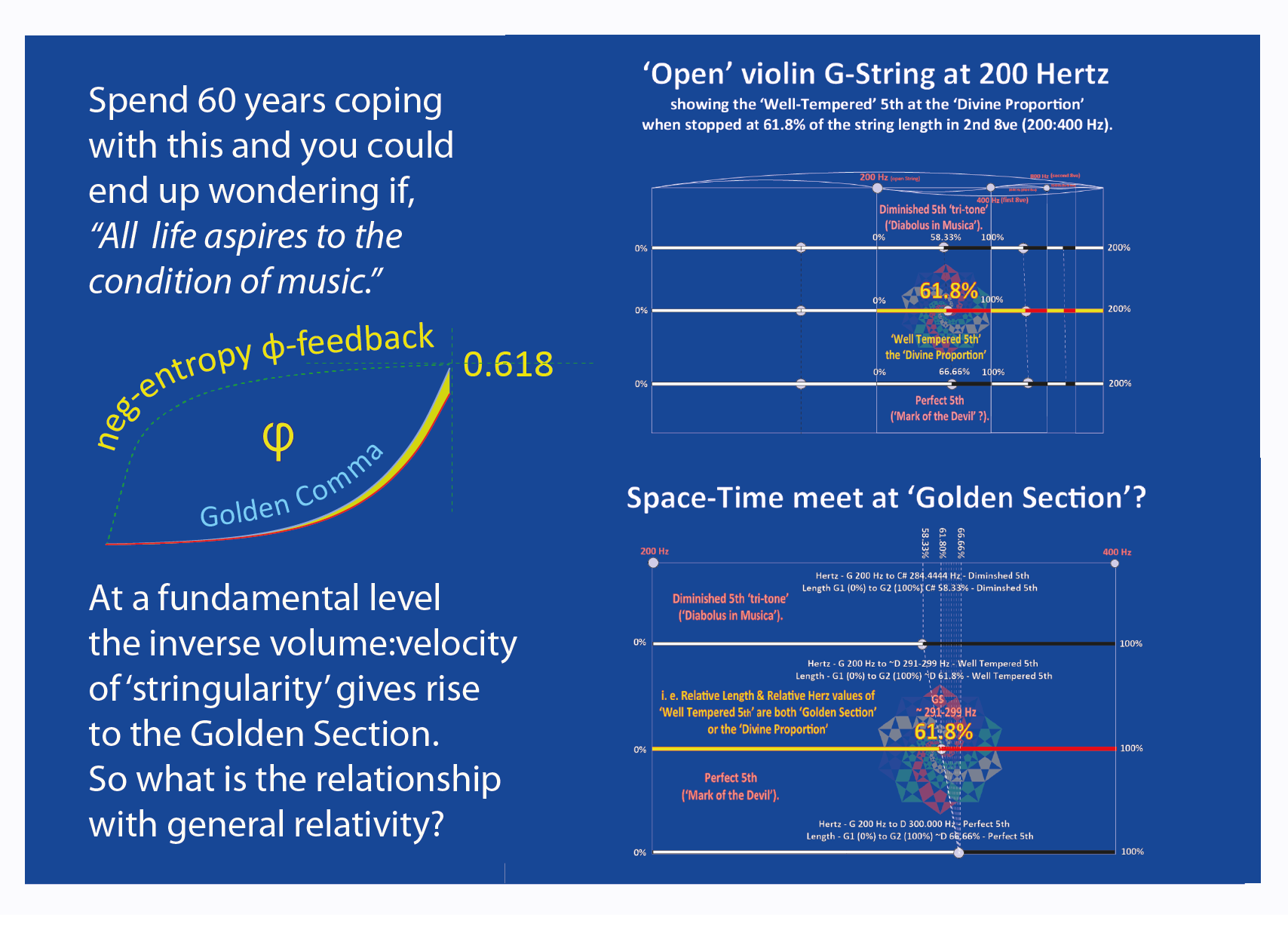
The Fibonacci sequence is a famous group of numbers beginning with 0 and 1 in which each number is the sum of the two before it. It begins 0, 1, 1, 2, 3, 5, 8, 13, 21 and continues infinitely. The pattern hides a powerful secret: If you divide each number in the sequence by its predecessor (except for 1 divided by 0), then as you move toward higher numbers, the result converges on the constant phi, or approximately 1.61803, otherwise known as the golden ratio.
My regenerative concept for the Trade Center was submitted to the New Visions New York panel for consideration as an overarching vision. The documentation is here. The concept of crystalline light shattering at 9:15 am on Sept. 11, in a site regenerated with a tree of life and "green towers" now lives on in many other urban design schemes.

 Or otherwise known as the original "Clash of the Titans" in Greek mythology. The plot of these stories is usually epic generational struggle between the dominant Elder God and the rebel generation, with one side winning out and establishing alternative hierarchies. These battles were fought before the existence of mankind, setting the backdrop of the fates and the direction of history.


 Posts
Posts